
A food budget should tell your money where to go. It should not make you afraid to buy enough food. If the plan regularly leaves you hungry, creates emergency store trips, or pushes you toward takeout, the number is too low or the structure is wrong.
Myth: the lowest number is the best budget
A budget succeeds when it can be repeated. Cutting spending in half overnight can ignore dietary needs, local prices, work schedules, and the number of meals eaten at home. Start from real spending and lower it gradually, often by 5 to 10 percent.
Myth: an expensive week means failure
Bulk purchases, holidays, and pantry restocks create uneven weeks. Judge the month. A $210 stock-up trip can fit a $600 month when later shops are lighter. Keep a 10 to 15 percent reserve for a fifth week or unexpected needs.
Myth: protein should always be cut first
Removing protein without replacing its role can make meals unsatisfying. Reduce the portion, change the type, or stretch it. One pound of ground meat mixed with beans can provide six taco servings instead of four.
Myth: every sale saves money
Buying two $6 products for $10 still costs $10. A sale helps when the item replaces a planned purchase, will be used before it expires, and fits available storage.
Myth: treats have to disappear
A plan with no enjoyment is hard to keep. Choose one treat category per trip or set a small treat amount. Buy ice cream this week and sparkling drinks next week rather than both every time.
Protect meals before extras
Keep ingredients that complete breakfasts, lunches, and dinners. Keep quick meals that fit real workdays. Then review duplicate roles, oversized quantities, aspirational produce, and nonessential drinks.
Use specific tradeoffs
Buy the favorite cereal and choose store-brand oats. Keep one convenient frozen meal and cook a larger soup for two nights. Spend more where you notice the difference and less where you do not.
Use the final cart review to connect the plan with the actual total before checkout.
A good budget includes enough food
Estimate how many breakfasts, lunches, dinners, and snacks will actually be eaten at home. A household with remote workers may need more lunch food than one that receives school or workplace meals. A cheap plan that ignores those meals simply moves spending to takeout or convenience stores.
Include one or two low-effort meals. Frozen dumplings, soup, eggs, sandwiches, or a prepared meal may cost more than cooking from scratch, but less than ordering food after an exhausting day.
Use satisfaction as a budget tool
Meals need enough substance and flavor to be repeated. Rice and beans can be inexpensive, but eating the same plain version all week may fail. Budget for sauces, spices, vegetables, cheese, or another ingredient that makes the meal something people want to eat.
This is not permission to buy every add-on. It is recognition that unused cheap food is expensive. The most affordable meal is one the household will actually finish.
Plan a minimum and a flexible layer
The minimum layer covers complete meals, basic snacks, and essential staples. The flexible layer covers premium versions, extra variety, and treats. When prices rise, reduce the flexible layer before shrinking the amount of food.
For example, keep enough fruit for the week but switch one premium berry package to apples or bananas. Keep coffee, but skip the extra bottled drink. Keep taco night, but use one meat package with beans instead of buying two.
Know when the budget truly needs to rise
A budget may need adjustment after a move, a dietary change, a new baby, a teenager’s growth spurt, or a shift from workplace meals to eating at home. Repeatedly missing the target under those conditions is information, not a moral failure.
Compare three months when possible. If the same meal plan now costs more despite careful choices, update the number and rebalance another category rather than pretending the old price still exists.
How to use Cart AI without turning it into a restriction tool
Set a realistic trip budget, then add products as you shop. Use the remaining-budget display as information. It should help you choose between flexible items, not pressure you to remove needed meals.
When you choose Adjust Cart, read each suggestion in context. Removing a nonessential item may be easy. Reducing two units to one may preserve the product while lowering the total. Skip any suggestion that would create a missing meal or ignore a dietary need.
Select the changes you want and review the projected total before applying them. The feature handles the math, while the shopper decides what has value. That balance makes the tool useful for budgeting without making the budget unnecessarily strict.
What should you track besides dollars?
Track unused food, emergency takeout, and extra store visits. These are signs that the budget may be cutting the wrong things. If produce is repeatedly wasted, buy less. If lunches run out every Thursday, add more filling staples rather than increasing random snacks.
Also note which premium items genuinely improve meals. A sauce used across four dinners may deserve its place. A specialty ingredient used once and forgotten may not. Value depends on use, not whether a product looks frugal.
Before each month begins, choose one change to test rather than rebuilding the entire food plan. Try fewer duplicate snacks, one additional leftover night, or a smaller quantity of a frequently wasted ingredient. Measure whether the change lowers spending without causing hunger, waste, or an extra store visit. Keep changes that work and discard rules that only make shopping harder.
How to plan a realistic grocery list with Cart AI
Go to the Lists tab and tap the plus button to begin. Saved lists show the number of items and estimated cost, so you can see whether a new plan is becoming too restrictive or too expensive before shopping.
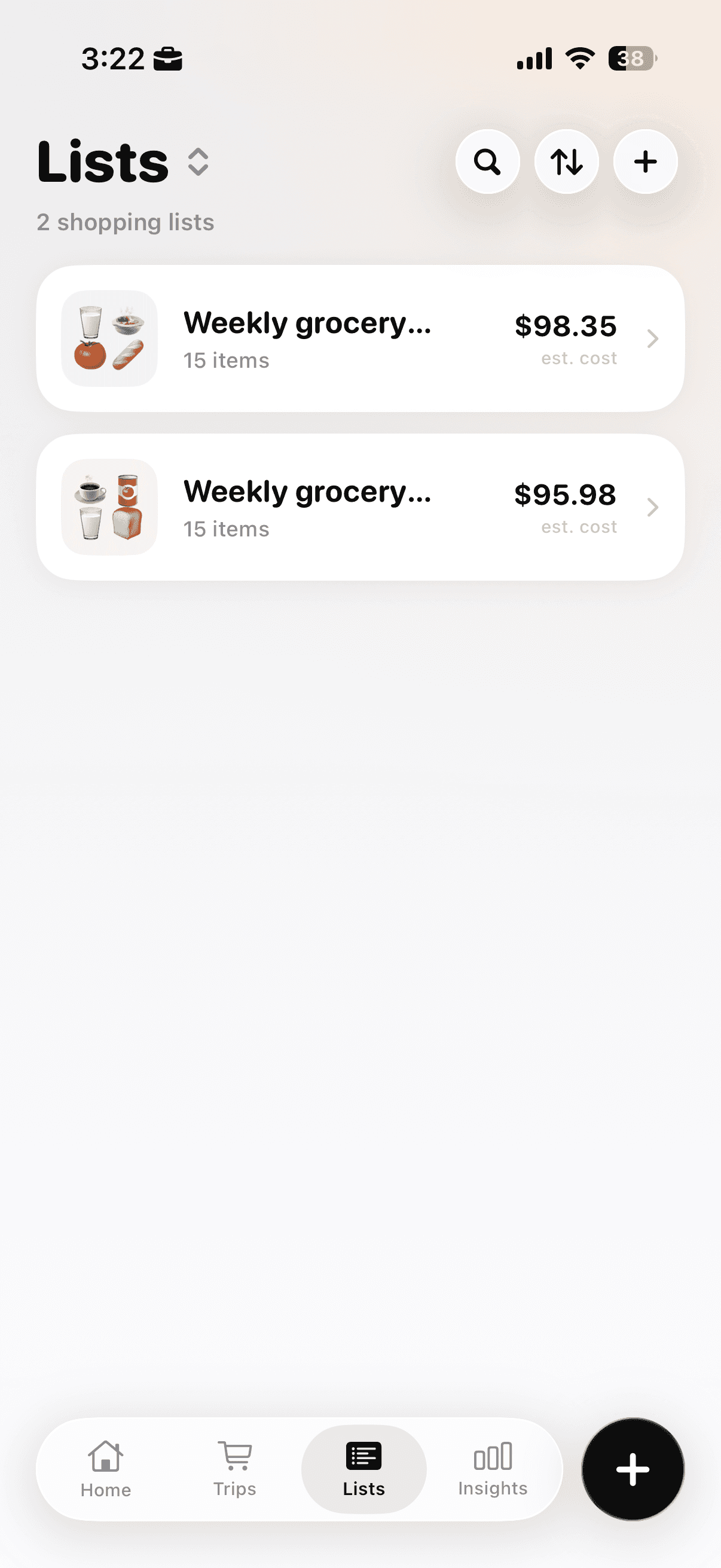
The Lists tab keeps saved lists, item counts, and estimated totals in one place.
Tap the plus button and choose Plan a Shopping List. Shop & Track Now starts a live trip, while Quick Cart Total is designed for quickly totaling products before checkout.
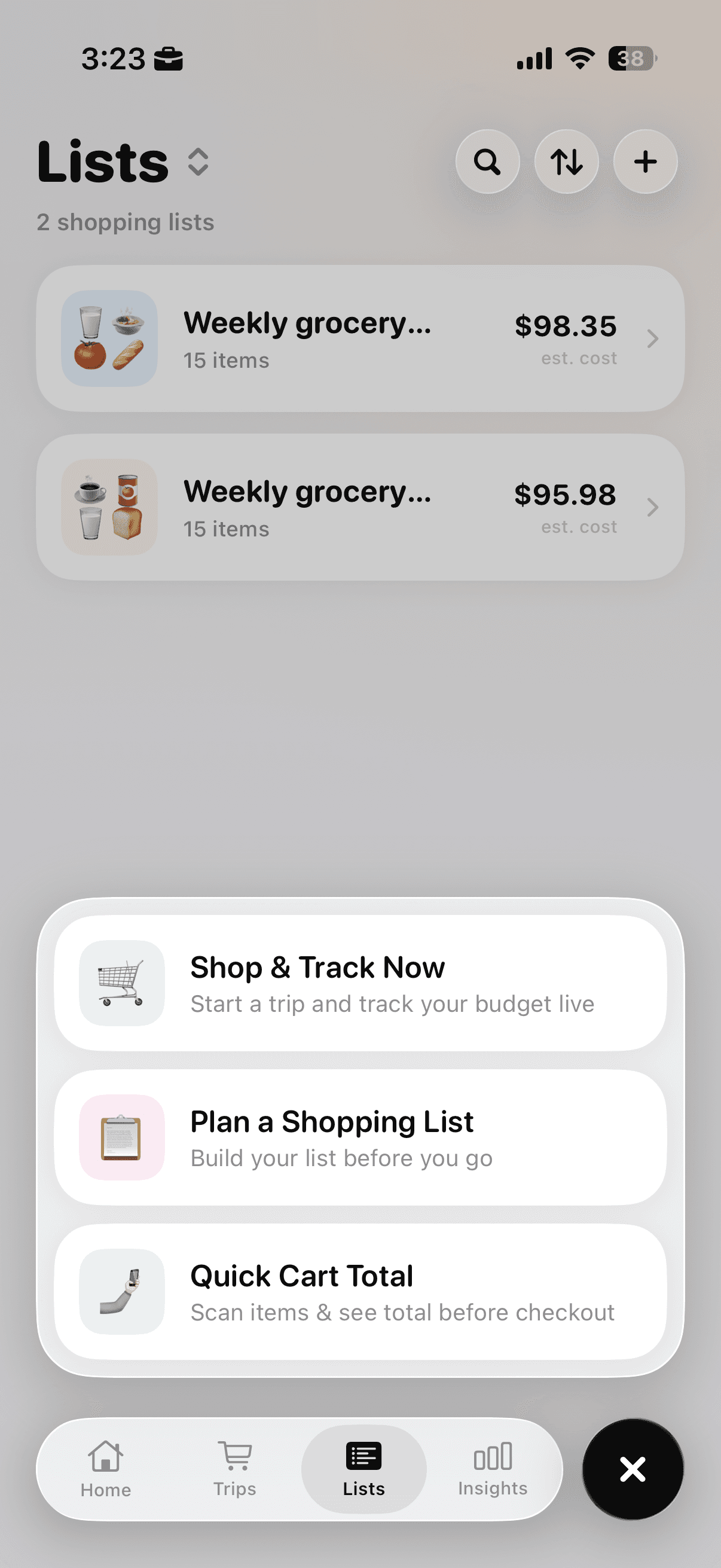
Choose Plan a Shopping List when preparing groceries before the store.
Select Plan a Shopping List, enable Plan with AI, and describe what enough food looks like. A useful prompt is “One week of filling meals for two adults under $150, including two quick dinners, snacks, and no dietary restrictions.” Add any dietary requirements directly.
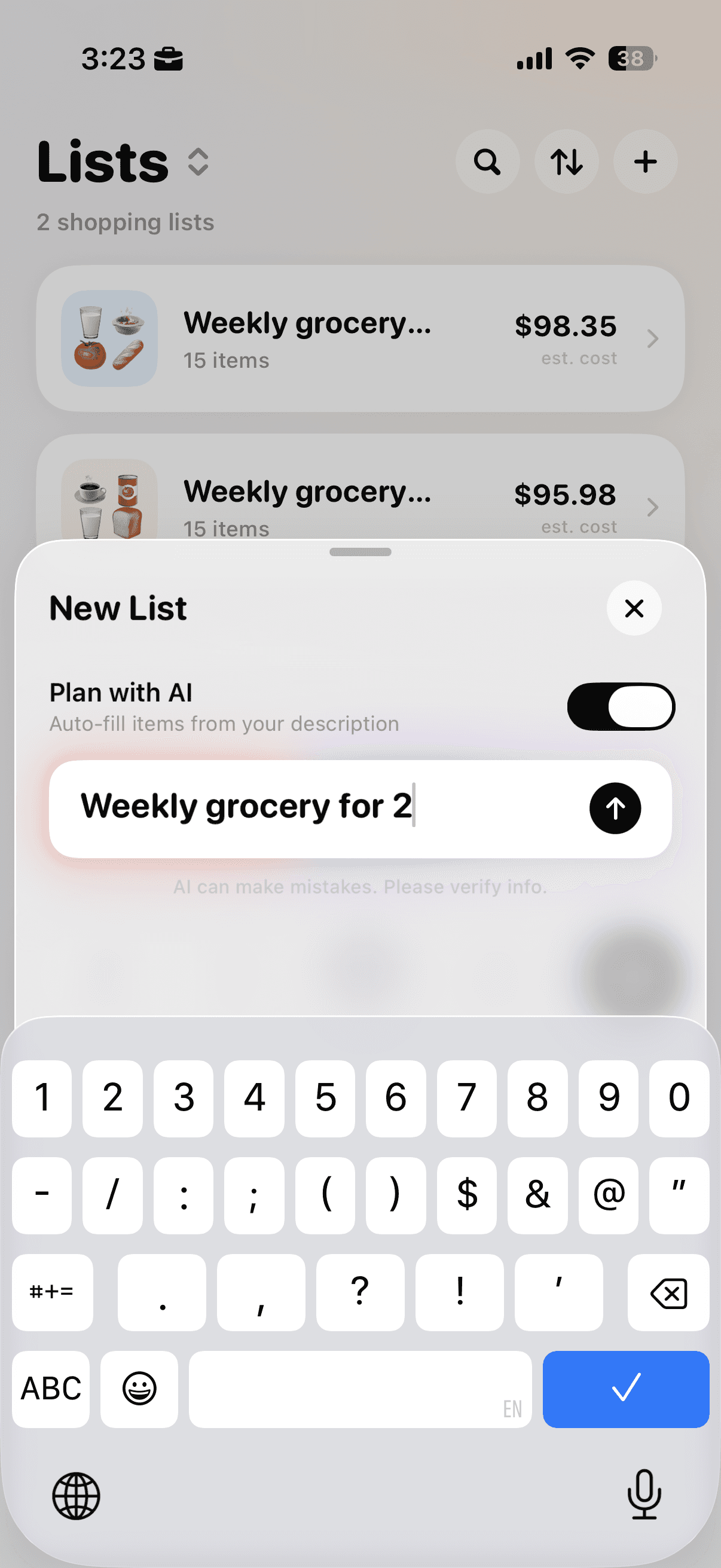
Enable Plan with AI and describe the household, timeframe, budget, and important constraints.
Review the generated list for satisfaction as well as price. Keep complete meals and realistic convenience food. Remove duplicates or products already at home, then check that the estimated total fits the budget without creating obvious gaps.
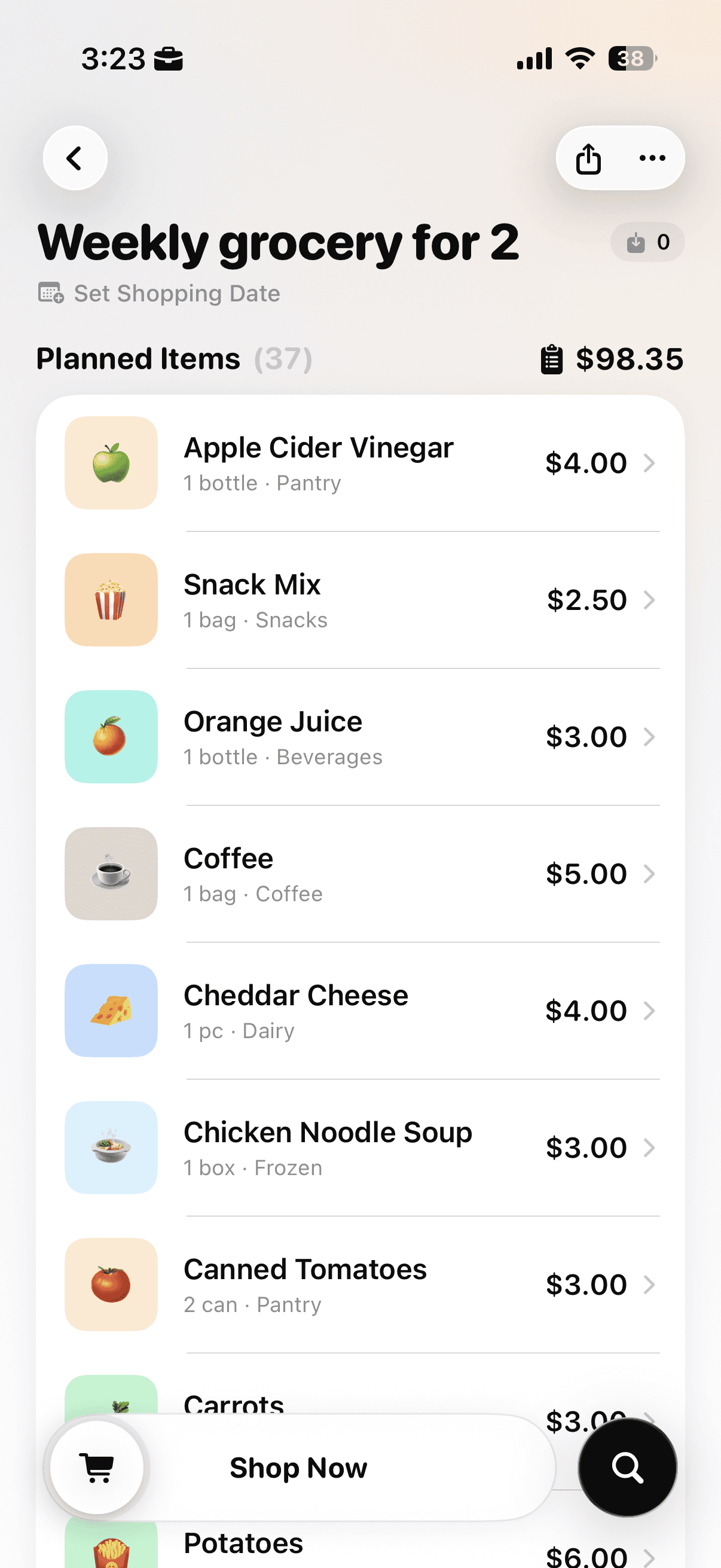
Review the generated items, quantities, categories, and estimated total before starting the trip.
A realistic budget grocery list can protect complete meals while keeping flexible products visible as tradeoffs.
The USDA food plan cost reports can provide broad context, but your own receipts and dietary needs should determine the working number.
For a clearer cart review when the total gets close, try Cart AI on the App Store